
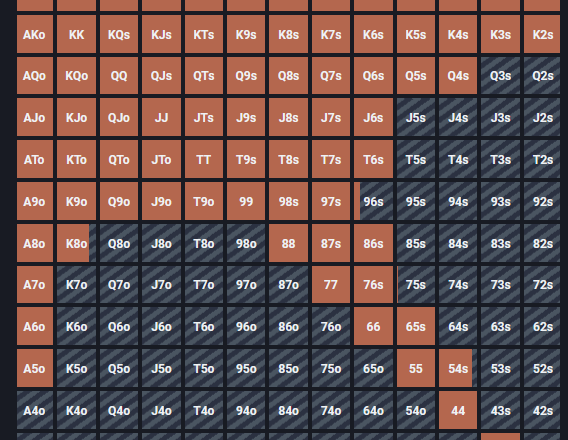
Let’s be real for a second. Poker isn’t just about the cards you’re dealt—it’s about what happens after the flop hits the felt. That’s where the game really starts to breathe. And honestly, for a long time, I relied on gut feel and a few basic heuristics. But then I discovered solver tools. And, well… it changed everything.
You’ve probably heard the buzzwords: GTO, equilibrium, range construction. They sound intimidating. But here’s the deal: solvers aren’t magic. They’re just math engines that brute-force the optimal play for every possible situation. The trick is knowing how to use them to sharpen your post-flop decisions without turning into a robot.
What Exactly Is a Solver Tool?
Think of a solver like a chess engine for poker. You feed it the board texture, stack sizes, ranges, and betting sizes—and it spits out a strategy that’s mathematically unexploitable. The most popular ones? PioSOLVER, GTO+, and MonkerSolver. They’re not cheap, but they’re worth every penny if you’re serious about improving.
But here’s the thing—you don’t need to run 10,000 simulations to get value. You just need to understand the patterns. The solver shows you which hands to bet, check, raise, or fold on each street. It’s like having a coach who never tilts.
Why Post-Flop Is the Real Battleground
Pre-flop is mostly a formula. You open, you 3-bet, you fold—it’s scripted. But post-flop? That’s where the money moves. Board textures change everything. A dry flop like K-7-2 is totally different from a wet flop like 9-8-6 with two suits. Solvers help you navigate that chaos.
I remember a hand I played a few years back—I had top pair on a monotone board. I bet big, got raised, and I tank-folded. Later, I plugged it into a solver. Turns out, my hand was a mandatory call. Ouch. But that’s the beauty of it—you learn from your mistakes, not just your wins.
Key Post-Flop Concepts Solvers Teach You
Solvers don’t just give you answers—they teach you why those answers work. Here are a few big ideas that’ll change how you think about post-flop play:
- Range vs. Range Thinking: You’re not playing a single hand—you’re playing your entire range against your opponent’s. Solvers balance your actions so you’re not predictable.
- Frequency-Based Betting: Instead of always betting or always checking, solvers mix in checks and bets at specific frequencies. It’s messy, but it’s optimal.
- Board Coverage: You need to protect your checking range on certain boards. A solver shows you which hands should check-raise and which should check-call.
- Polarization vs. Merged Ranges: On dry boards, you’ll often see polarized betting (nuts or air). On wet boards, merged ranges (value and draws) dominate.
These concepts sound abstract until you see them in action. That’s where the solver shines—it makes the abstract tangible.
A Quick Example: Dry Flop Strategy
Let’s say you open from the cutoff and the big blind calls. Flop comes A♠ 7♦ 2♣. Dry as a bone. A solver will tell you to bet small—like 33% pot—with most of your range. Why? Because the big blind misses this board 70% of the time. You want to apply pressure with your entire range, not just your strong hands.
But here’s the nuance: you should check back some of your medium-strength hands (like A-J) to protect your checking range. If you always bet your top pair, you become easy to exploit. Solvers force you to think in layers.
How to Actually Use a Solver (Without Overthinking)
I get it—sitting down with a solver for hours feels like homework. But you don’t need to simulate every spot. Start small. Pick one flop texture a week. Run a few scenarios. Take notes. Then go play and see if you can apply what you learned.
Here’s a simple workflow I use:
- Identify a hand you played poorly (or a spot you’re unsure about).
- Input the pre-flop ranges and stack sizes into the solver.
- Run the simulation for the flop, turn, and river.
- Compare the solver’s strategy with your actual play.
- Look for one or two adjustments you can make next time.
That’s it. You don’t need to memorize every node. Just focus on the biggest leaks—like over-folding to check-raises or betting too large on dry boards.
Common Mistakes Players Make With Solvers
Honestly, the biggest mistake is trying to play exactly like a solver. That’s impossible—humans can’t randomize perfectly. Plus, solvers assume perfect play from both sides. In reality, your opponents make mistakes. So use solvers as a baseline, not a bible.
Another mistake? Ignoring stack depth. Solvers are sensitive to stack-to-pot ratios (SPR). A strategy that works with 100 big blinds might be terrible with 30 big blinds. Always check the stack sizes before you trust the output.
Integrating Solver Insights Into Live Play
You can’t run a solver at the table—obviously. But you can internalize the patterns. For instance, I now instinctively know that on a J-T-9 two-tone flop, I should check-raise more often with draws and slow-play sets. That came from drilling solver outputs.
One trick: create a “cheat sheet” of common flop textures and the solver’s recommended betting frequencies. Keep it on your phone. Review it before sessions. Over time, it becomes second nature.
| Flop Texture | Typical Bet Size | Key Adjustment |
|---|---|---|
| Dry (e.g., A-7-2 rainbow) | 33% pot | Bet often, check back medium strength |
| Wet (e.g., 9-8-6 two-tone) | 66-75% pot | Polarize: bet big with draws and value |
| Paired (e.g., K-K-5) | 50% pot | Check more, trap with full houses |
| Monotone (e.g., Q-7-3 all hearts) | 33-50% pot | Check-raise with nut flush draws |
That table is a starting point—not gospel. Every situation is unique. But it’s a hell of a lot better than guessing.
The Human Side of Solver Work
Here’s the thing—solvers are cold. They don’t account for tells, table dynamics, or your opponent’s mood. That’s fine. You’re not supposed to replace your intuition; you’re supposed to refine it. Think of the solver as a sparring partner, not a replacement for your brain.
I’ve seen players get obsessed with GTO and then freeze up when a recreational player does something weird—like min-raising with 7-2 offsuit. The solver doesn’t have an answer for that. You need to adapt. So use solvers to build a strong foundation, then layer in exploitative adjustments.
And yeah—sometimes you’ll make a play that the solver hates, but it works because your opponent is predictable. That’s poker. The solver is a guide, not a prison.
Why Most Players Give Up on Solvers
It’s easy to get overwhelmed. The outputs are dense. The learning curve is steep. But honestly, you don’t need to master every nuance. Just focus on the spots where you lose the most money—like 3-bet pots or river decisions. That’s where solvers give you the biggest return on investment.
I remember spending a whole weekend on a single turn spot. Frustrating? Sure. But after that, I saved myself hundreds of dollars in future sessions. Small effort, huge payoff.
Putting It All Together
Using solver tools to improve post-flop decision making isn’t about memorizing every line. It’s about understanding the why behind the math. You’ll start seeing patterns—like when to slow-play, when to bluff, and when to just fold. Your instincts will get sharper. Your win rate will follow.
So grab a solver. Pick one flop. Run it. Take notes. Then go play and see the difference. It’s not magic—it’s just better thinking.