
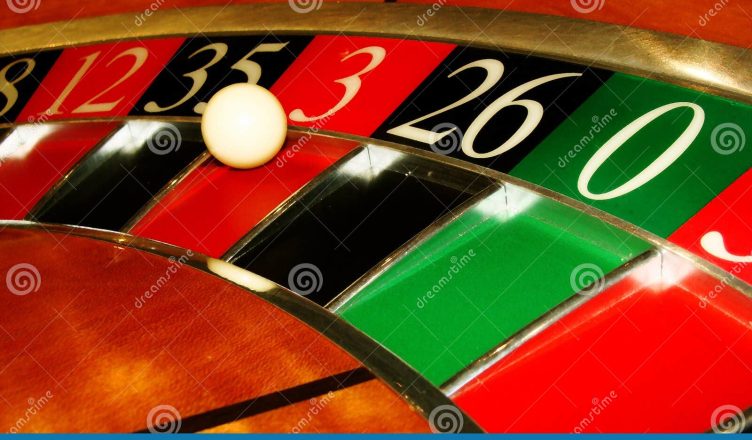
Let’s be honest—when you hear “roulette wheel bias,” you might picture a guy in a trench coat with a stopwatch and a tiny notebook, scribbling furiously while sipping cheap coffee. And honestly? That’s not far off. But here’s the deal: the idea that a physical wheel might not be perfectly random isn’t some conspiracy theory. It’s physics. It’s engineering tolerance. And for a tiny, obsessive subset of gamblers, it’s a legitimate edge.
Now, before we dive into the weeds, let’s get one thing straight. This isn’t about cheating. No magnets, no lasers, no sneaky toe-taps. This is about observation, data collection, and understanding that a machine built by humans—and maintained by tired casino staff—will eventually show its quirks. That’s where bias analysis comes in.
What Exactly Is a Roulette Wheel Bias?
In a perfect world, every pocket on a roulette wheel has an equal chance of catching the ball. The math says 1 in 37 for European wheels (or 1 in 38 for American, with that extra double-zero). But the real world is messy. A wheel is a physical object. It has a spindle, a rotor, frets, deflectors, and a ball track. Over time, parts wear down. A fret gets slightly loose. A deflector gets a tiny burr. The wheel might sit slightly off-level because a leveling screw backed out during a particularly rowdy Saturday night.
When any of these things happen, the ball starts favoring certain numbers or sections. That’s the bias. It’s not a huge swing—we’re talking maybe a 2% to 5% deviation from expected frequency. But over hundreds of spins, that edge compounds. And in a game with a built-in house edge of 2.7% (European) or 5.26% (American), shaving off even a couple of percentage points flips the math in your favor. Not by a lot, but enough.
The Two Main Types of Bias: Physical and Dealer-Induced
Here’s where it gets interesting. You’ve got two distinct flavors of bias, and they require totally different approaches.
1. Physical Wheel Bias
This is the classic one. It’s all about the hardware. A pocket that’s slightly deeper, a fret that’s slightly wider, a ball track with a rough patch that slows the ball down at the same spot every time. These are mechanical flaws. They’re often tiny, but they’re measurable.
Think of it like a slightly warped vinyl record. You can’t see the warp with your naked eye, but you can hear it skip every time the needle hits that spot. Same principle here. The ball hits that rough patch, loses a bit of momentum, and drops into a predictable zone.
2. Dealer-Induced Bias (Visual Ballistics)
This one’s more subtle, and honestly, it’s a bit controversial. Some dealers have a consistent release point and spin speed. They’re not trying to be predictable—it’s just muscle memory. If a dealer spins the wheel at the same velocity and releases the ball from the same spot every time, the outcome becomes… well, not random. It becomes a physics problem with known initial conditions.
This is where visual ballistics comes in. You track the rotor speed, the ball speed, and the release point. Then you calculate where the ball will likely land, accounting for deceleration. It’s not exact—you’re predicting a sector, not a single number. But a sector bet can still be profitable.
How to Actually Analyze a Wheel for Bias
Alright, let’s get practical. You can’t just walk into a casino and stare at a wheel for ten minutes. You need data. Lots of it. And you need a system. Here’s a rough workflow that serious players use.
Step 1: Data Collection (The Grind)
You’re going to need at least 1,000 spins per wheel. Some analysts say 2,000 to be statistically confident. That’s hours of sitting at the table, tracking every single outcome. You can use a simple pen-and-paper layout, or you can use a mobile app that logs spins. Honestly, the app is better—it reduces human error, and you can export the data later.
Pro tip: Don’t just record the winning number. Record the dealer, the time of day, and whether the wheel was recently cleaned. These variables matter.
Step 2: Statistical Analysis (The Math)
Once you have your dataset, you’re looking for anomalies. The gold standard is the chi-squared test. It’s a statistical test that compares observed frequencies against expected frequencies. If the p-value drops below 0.05 (meaning there’s less than a 5% chance the deviation is pure luck), you might have a biased wheel.
But here’s the catch—and this is where most people screw up. A single number hitting 30 times in 1,000 spins instead of 27 times is not a bias. That’s noise. You need a cluster of numbers, or a repeating sector, to be confident. Look for groups of 3-5 adjacent numbers that are hitting at a rate significantly above expectation.
Step 3: Physical Inspection (The Sneaky Part)
If the stats look promising, you need to confirm the cause. This is tricky because you can’t exactly crawl under the table. But you can observe. Watch the ball’s trajectory. Does it slow down at a specific point? Does it bounce oddly off a particular fret? Does the wheel wobble slightly on its axis?
Some players use a small spirit level on the edge of the wheel frame when the pit boss isn’t looking. That’s a bit bold, but it works. A wheel that’s off-level by even 1 degree can create a measurable bias.
Physical Prediction Methods: Beyond Just Bias
Bias analysis is the long game. It’s about finding a wheel that’s already flawed. But there’s another school of thought—predicting outcomes in real-time. This is often called “sector slicing” or “visual ballistics.” It’s harder, but it doesn’t require a defective wheel.
The Physics of the Spin
When the dealer spins the wheel, they impart a certain angular velocity. When they spin the ball, it has its own velocity. The ball loses speed due to friction with the track and air resistance. The wheel also loses speed, but at a different rate. By timing both rotations—usually with a stopwatch or just a good internal clock—you can estimate when the ball will fall off the track.
Here’s the simplified version: Count the number of revolutions the wheel makes in a set time. Count the ball’s revolutions. The difference tells you the relative speed. Then, based on the ball’s deceleration curve, you project where it will drop. It’s not rocket science, but it’s close.
The “Neighbor” Bet Strategy
Once you have a predicted sector—say, a 5-number block—you bet on those numbers. You might also bet the neighbors on the wheel layout (the numbers physically adjacent on the wheel, not the table layout). This is a classic European strategy. The payout isn’t huge, but the hit rate can be significantly above random.
Let’s be clear: this is incredibly difficult to pull off in a live casino. You need to make bets quickly, often while the ball is still spinning. Dealers and pit bosses are trained to spot this behavior. And honestly, most players who try it lose because they miscalculate the deceleration. The margin for error is razor-thin.
Tools of the Trade (And Why Most Are Useless)
You’ll find all sorts of gadgets online—laser pointers, smartphone apps that claim to predict outcomes, even hidden computers. Here’s the deal: most of them are garbage. Casinos have strict rules about electronics at the table. And the ones that work? They’re illegal in most jurisdictions. We’re not talking about cheating, but using a device to calculate ballistics is a gray area that can get you banned or arrested.
Your best tools are free: a sharp eye, a reliable stopwatch, and a notebook. That’s it. That’s the whole kit.
The Reality Check: Why Casinos Aren’t Panicking
Here’s a sobering thought. Even if you find a biased wheel, the edge is small. We’re talking maybe 2-3% over the house edge. That means you need a large bankroll and a lot of patience to make it worthwhile. And casinos know this. They regularly audit their wheels. They rotate tables. They replace worn parts. A wheel that’s biased today might be fixed tomorrow.
Plus, there’s the human factor. Pit bosses watch for players who bet erratically or who only bet on certain sections. If you’re winning consistently, they’ll either switch the dealer, swap the wheel, or simply ask you to leave. It’s not illegal to win, but it’s not exactly welcomed either.
Ethical Considerations (Yes, We Need to Talk About This)
Is it cheating? Well, that depends on who you ask. You’re not manipulating the wheel. You’re not using a device. You’re just observing and calculating. In most legal jurisdictions, that’s considered “advantage play,” which is technically legal—though casinos reserve the right to ban you for any reason. It’s the same category as card counting in blackjack. Not illegal, but definitely frowned upon.
If you’re going to try this, be prepared for the social consequences. You’ll get barred. You might get escorted out. And if you’re really good, you might get a lifetime ban from a casino chain. Is it worth it? That’s a personal call. Some players say the thrill of beating the system is worth the risk. Others say it’s just a way to lose money more slowly.
Final Thoughts on Bias and Prediction
Roulette wheel bias analysis is a fascinating intersection of physics, statistics, and human behavior. It’s not a get-rich-quick scheme. It’s a discipline that requires hours of tedious data collection, a solid grasp of probability, and the nerve to act on your findings. The house edge is real, but it’s not invincible. It’s just… bendable. Slightly. Under the right conditions.