
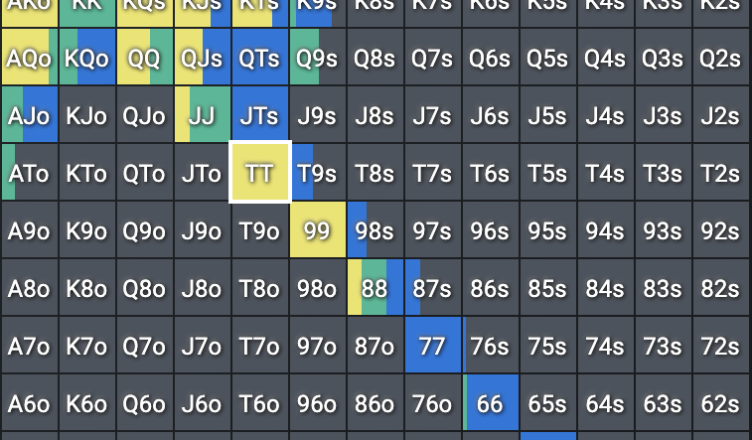
Let’s be honest — Pot-Limit Omaha is a wild ride. You’ve got four cards in your hand, the pot’s often bloated, and suddenly you’re staring down three or four opponents. Multi-way pots in PLO? That’s where the real money is made… or lost. Range construction in these spots isn’t just important — it’s the difference between stacking chips and stacking your losses.
Here’s the deal: most players treat multi-way pots like they’re heads-up with extra bodies. They don’t. You need to tighten up, think in terms of equity distribution, and — well — get a little obsessive about hand selection. Let’s break it down.
Why Multi-Way Pots Are a Different Beast
In heads-up PLO, you can get away with marginal hands if you’re aggressive. But add a third, fourth, or fifth player? The math shifts. Your hand’s raw equity plummets because more players means more draws, more blockers, and more ways to get coolered.
Think of it like a crowded elevator. You wouldn’t swing your elbows around, right? Same idea here — you can’t play loose. Multi-way pots reward high-card strength, suitedness, and connectivity. Single-suited hands with gaps? They’re basically dead weight.
The Core Principle: Nut Potential Over Raw Equity
In a three-way pot, having 35% equity might sound okay. But if that equity comes from non-nut draws — like a low flush or a vulnerable straight — you’re just burning money. Why? Because someone else will have the nuts, and you’ll be paying them off.
So, when constructing ranges, prioritize hands that can flop the absolute nuts or at least strong draws to them. That means:
- Double-suited aces (e.g., A♠ A♥ K♠ K♥) — premium for multi-way action.
- Connected rundowns like J-T-9-8 double-suited — they hit monster straights and flushes.
- High pairs with suited aces — think A-A-x-x with a suited ace for flush backup.
Yeah, it’s a bit boring. But boring wins in PLO multi-way.
Building Your Preflop Range for 3+ Players
Alright, let’s get practical. You’re on the button with a decent hand. Three limpers ahead. What are you raising with? What are you folding?
Here’s a rough guideline — not a rigid formula, but a starting point. Adjust for stack depths and opponent tendencies, obviously.
| Hand Type | Example | Action in Multi-Way Pot |
|---|---|---|
| Double-suited aces | A♠ A♣ K♠ Q♣ | Raise or re-raise |
| Single-suited aces | A♥ A♦ T♥ 9♠ | Raise if deep, call if shallow |
| High rundowns (double-suited) | K♠ Q♠ J♥ T♥ | Raise |
| Medium rundowns (single-suited) | 9♣ 8♣ 7♦ 6♠ | Call if cheap, fold to big raise |
| Weak aces (no suits, no coordination) | A♠ A♦ 3♣ 2♥ | Fold to aggression, call min raises |
| Junk like Q♥ J♠ 7♦ 2♣ | — | Fold. Always. |
Notice something? No “speculative” calls with garbage. In multi-way pots, that garbage stinks up your whole session.
The “Squeeze” Play — But Be Careful
You might be tempted to squeeze with a marginal hand when there’s dead money. Sure, it works sometimes. But in multi-way pots, you’re often up against players who’ll call anyway — especially at lower stakes. So only squeeze with hands that can flop well, like A-A-x-x or a strong rundown. Otherwise, you’re just inflating a pot you’ll lose.
Postflop Range Adjustments: The Real Art
Preflop is just the appetizer. Postflop is where range construction gets… well, messy. You can’t just bet all your strong hands and check all your draws. Multi-way dynamics force you to think about relative hand strength.
Let’s say you flop top two pair on a board like K♠ 8♦ 3♣. In heads-up, that’s a monster. In a four-way pot? It’s a trap. Someone could have a set, a straight draw, or a backdoor flush. Your range needs to account for that.
Here’s a quick mental checklist for postflop range construction:
- Nut draws (e.g., nut flush draw with a straight draw) — bet or raise for value.
- Second-nut draws (e.g., king-high flush draw) — check-call, but be wary of raises.
- Top pair with weak kickers — check-fold often, especially if multi-way.
- Sets — bet big, but consider slow-playing only if board is dry.
- Bluffs — almost never. Multi-way pots are not for bluffing unless you have blockers to the nuts.
Honestly, the biggest mistake I see? Players overvaluing top pair. In PLO, top pair is like a paper umbrella in a hurricane — it looks okay until the storm hits.
Equity Realization: The Hidden Factor
You know that term “equity realization”? It’s how much of your hand’s raw equity you can actually capture postflop. In multi-way pots, it’s lower. Why? Because opponents will fold when you hit, or raise when you miss. So a hand with 25% raw equity might only realize 15% in practice. That means you need stronger hands to enter the pot.
For example, a hand like 9♠ 8♠ 7♦ 6♦ looks pretty. But in a multi-way pot, you’ll often flop a weak draw that gets pushed around. Better to wait for A♠ K♠ Q♦ J♦ — that hand realizes equity like a champ.
Common Pitfalls — and How to Dodge Them
Nobody’s perfect. I’ve made these mistakes, you’ve made them, and the guy next to you is probably making them right now. Let’s name a few:
- Playing too many hands — Just because you have four cards doesn’t mean you should see every flop. Tighten up preflop, especially from early position.
- Ignoring position — In multi-way pots, position is king. You want to act last with your draws and middling hands. Out of position? Fold more.
- Calling with dominated draws — If you have a flush draw to the second-nut, and someone’s betting big, you’re often drawing dead. Don’t chase.
- Overvaluing single-suited hands — One suit is nice, but two suits double your flush potential. In multi-way, that matters.
One more thing — stack depth matters. Deep stacks let you play more speculative hands because you can chase draws profitably. Shallow stacks? Stick to premiums. It’s that simple.
Putting It All Together: A Sample Range for a 4-Way Pot
Imagine you’re in the cutoff. Two limpers, and the button is loose. You’re 100 big blinds deep. What’s a reasonable raising range?
- Top 5% of hands: Double-suited aces, A-A-K-Q double-suited, K-K-Q-J double-suited.
- Next 10%: Single-suited aces with a suited ace, high rundowns like Q-J-T-9 double-suited.
- Fold everything else: Seriously. Hands like A♠ K♣ Q♦ 2♥ are garbage in multi-way.
If you’re calling a raise instead of raising, tighten up even more. You want to see flops with hands that can flop the nuts, not just “playable” stuff.
Final Thought: It’s a Marathon, Not a Sprint
Multi-way PLO is a grind. You’ll fold a lot. You’ll get bored. But the players who master range construction — who fold those marginal hands and wait for the right spots — they’re the ones who walk away with the chips.
So next time you’re in a four-way pot with 9-8-7-6 offsuit, remember: that hand is a trap. Fold it, smile, and wait for the double-suited aces. Your bankroll will thank you.
Now go play — and construct those ranges like a pro.