
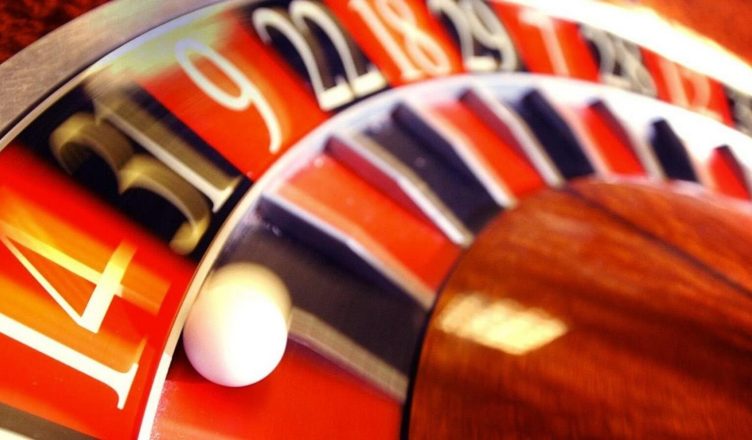
Let’s be honest. Roulette is a game of chance. The house edge is a mathematical fact, a silent partner on every spin. But walk into any bustling casino, and you’ll see them. The players with their notebooks, their intense gaze fixed on the wheel, tracking numbers with a quiet fervor. Are they just superstitious? Or is there a genuine art to watching the wheel—a skill that goes beyond blind luck?
Well, here’s the deal. While you can’t predict the future, you can become a masterful observer of the present. The physical roulette table offers a sensory experience no online game can match. The clatter of the ball, the spin of the rotor, the felt, the dealer’s rhythm. This is the canvas. And your eyes and ears are your primary tools. This isn’t about “beating” the game in a guaranteed sense. It’s about the art of engaged play, of finding a deeper layer of interaction within the chaos.
What Are You Really Looking For? Beyond Lucky Numbers
Forget your birthday. Forget the number from your dream. Real observation in roulette play is about two intertwined things: the wheel itself and the flow of the game. It starts with something surprisingly simple: wheel bias analysis. Now, this is a classic, long-tail concept. Modern wheels are engineered to near perfection, but they are still physical objects. Wear and tear, a slight warp, a tiny imperfection in the frets—over thousands of spins, these could lead to certain numbers or sections hitting more often than pure probability suggests.
Casinos are hyper-aware of this and maintain their equipment meticulously. So, spotting a true, exploitable bias in a modern casino is like finding a needle in a haystack. But the process of looking changes how you play. It shifts you from passive better to active investigator.
The Human Element: Dealer Signature
This is where it gets interesting. A more discussed—and controversial—aspect is the idea of dealer signature. The theory goes that a dealer, over a long shift, may develop a consistent release speed and force. Combine that with a rotor spinning at a relatively consistent speed, and the ball might tend to land in a similar numerical neighborhood more often.
Is it reliable? Honestly, rarely. Dealers vary their action consciously. But observing a dealer’s rhythm is a fantastic exercise in pattern recognition. You start to see the game in segments of the wheel, not just as individual numbers. You might notice the ball tends to bounce wildly off a certain diamond, or that a particular rotor seems to slow down in a predictable way. You’re not counting cards, but you’re reading the room—and the wheel.
How to Practice Your Observational Skills
Okay, so you want to look with purpose. What does that actually look like? Don’t just jump in and bet. Sit down, or stand back, and watch. For at least 30 spins. Use a simple tracking chart—you can even just use your phone’s notes app. Don’t just log numbers. Log the dealer, the time, maybe even the ball they’re using.
Look for clusters. Not just of numbers, but of sections. Is the ball landing in the third dozen repeatedly? Is it favoring black over red for this dealer’s spin? More importantly, watch the mechanics. Listen to the sound of the ball as it decelerates. Does it have a distinctive click-clack pattern? It’s about engaging all your senses.
| What to Observe | Why It Matters | Realistic Expectation |
| Dealer’s release style (hard, soft, variable) | Could influence ball velocity and initial orbit. | Builds a “profile,” not a prediction. |
| Rotor speed consistency | A slowing rotor might make certain sections more predictable. | Helps time when to place “final” bets. |
| Ball bounce and chatter | A lively vs. dead ball changes outcomes. | Understands the role of pure physics. |
| Number/Section Clusters (short-term) | Identifies temporary “hot” zones or cold streaks. | Informs betting choices, not guarantees. |
The Mental Shift: From Gambler to Analyst
This practice does something profound to your mindset. It turns a game of luck into a… well, a game of observational skill with a luck-based outcome. The difference is subtle but powerful. You’re no longer just throwing chips and hoping. You’re gathering data. You’re making notes. This inherently slows down your play, which is actually a fantastic bankroll management tool. You become more deliberate.
You start to see patterns in the randomness—or, more accurately, you see the absence of long-term patterns, which is just as valuable. You learn that a number hitting three times in a row is a statistical quirk, not a “due” trend. That recognition is the true win.
The Limits and The Ethics
Let’s not kid ourselves. The casino has every advantage. Electronic monitoring detects wheel biases far faster than any human can. Pit bosses watch for players tracking numbers too diligently. And honestly, the variance in the game is so high that any pattern you think you see could evaporate in the next ten spins.
That said, the art isn’t about finding a magic key. It’s about the pursuit itself. It’s about being present, engaged, and thoughtful in an environment designed for impulsive action. It makes the game more interesting, more cerebral. And sometimes, that deeper engagement is its own reward—win or lose.
The Final Spin: A Thoughtful Conclusion
So, is there an art to observation and pattern recognition in physical roulette? Absolutely. But the masterpiece you’re creating isn’t a ledger of wins. It’s a refined skill of attention. It’s the ability to sit amidst the ringing slots and buzzing crowds and focus on a single, spinning wheel, understanding its rhythms and its utter capriciousness.
You might just find that this approach—this art—makes you a more patient, more disciplined, and honestly, a more entertained player. And in a game ruled by chance, that’s a pattern worth recognizing.