
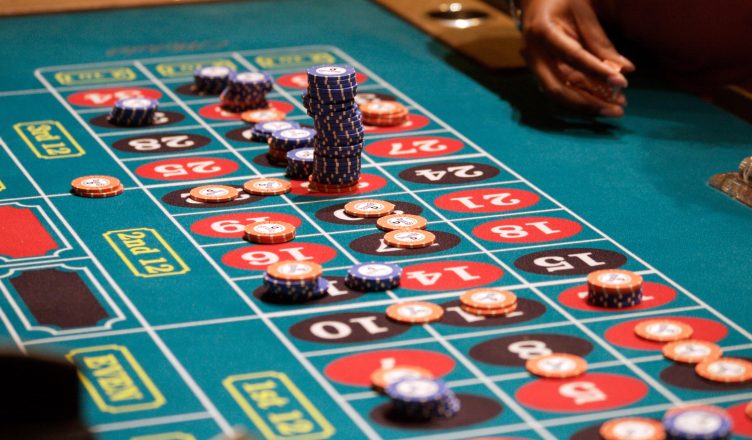
Let’s be honest for a second. Roulette is a blast—the spinning wheel, the clattering ball, that electric moment of anticipation. But here’s the deal: without a plan for your money, that fun can vanish faster than your stack of chips on a unlucky dozen. Budgeting for roulette isn’t about guaranteeing a win; that’s a fool’s errand. It’s about managing your entertainment fund so the thrill lasts, and you walk away on your own terms.
Think of it like planning a night out. You wouldn’t just grab your entire wallet and spend until it’s empty at the first bar, right? You’d set a limit. Roulette sessions need the same mindset. This is your guide to building that discipline.
Why Your Roulette Bankroll Isn’t Just “Money You’re Willing to Lose”
Sure, you’ve heard the old adage: “Only gamble what you can afford to lose.” It’s true, but it’s also vague. Your roulette session bankroll is more specific. It’s a dedicated amount, separate from life funds, that you’ve consciously allocated for the entertainment value of playing. Treating it with respect is the single biggest shift you can make from a casual, often regrettable, bettor to a strategic player.
Without a system, emotion takes over. A few losses can trigger the infamous “chase,” where bet sizes balloon trying to recoup losses. A good bankroll management strategy for roulette acts as a circuit breaker against that impulse. It keeps you in the game, mentally clear, and honestly, having more fun.
Core Budgeting Systems for Your Session
Okay, let’s get practical. How do you actually slice up your bankroll? Here are a few tried-and-true methods. None are magic, but each provides a different kind of guardrail.
The Session Limit Method (The Straightforward One)
Simple. You decide on a fixed amount for the night—say, $100. That’s your session bankroll. Once it’s gone, you’re done. No ATM trips, no “just one more spin” with your taxi money. This is perfect for casual players who value a hard stop. The key is the ironclad rule. It’s a budget, not a suggestion.
The Percentage-Based Unit System (The Disciplined Player’s Choice)
This is where things get more structured, and honestly, more powerful for longer play. You break your total bankroll into “units.” A common rule is that a single bet should be 1-2% of your total session bankroll.
So, if your session bankroll is $200, your standard bet unit is $2 (1%). This method protects you from devastating downswings. Even a terrible run of 10 straight losses only costs you $20, leaving you plenty of capital to recover. It forces consistency. You can adjust slightly—maybe going to 2 units ($4) on a strong feeling—but you never, ever bet 10 units because you’re frustrated.
The Win Goal & Loss Limit (The Two-Pronged Strategy)
This one creates both a floor and a ceiling. Before you play, you set two targets: a loss limit (maybe 50% of your session bankroll) and a win goal (say, a 50% profit).
| Scenario | Bankroll: $200 | Action |
| You hit $300 (50% win goal) | Profit: +$100 | Stop playing. Session is a success. |
| You fall to $100 (50% loss limit) | Loss: -$100 | Stop playing. Preserve remaining $100. |
| You fluctuate between $150-$250 | – | Continue playing, enjoying the ride. |
This system books wins and cuts losses mechanically, removing emotion from the exit decision. It’s surprisingly effective at creating positive feelings about sessions, even losing ones, because you stuck to your plan.
Matching a Betting Strategy to Your Bankroll
Now, how you bet that bankroll matters just as much. Some famous roulette betting systems have major implications for your wallet.
Progressive Systems (The Cautionary Tale)
Martingale, Fibonacci, D’Alembert—these all involve increasing your bet after a loss. They sound great in theory, promising to claw back losses with one win. But for roulette budget management, they’re landmines. They require a huge bankroll to withstand a modest losing streak, and you’ll quickly hit table maximums. Using a progressive system on a modest bankroll is a fast track to bust. Tread carefully, if at all.
Non-Progressive & Flat Betting (The Sustainable Choice)
Flat Betting:
You bet the same amount every spin. It’s boring, maybe, but it’s the absolute best friend of your bankroll. It gives variance nowhere to hide, letting you play the maximum number of spins. Pair this with the Percentage-Based Unit system above, and you’ve got a rock-solid foundation.
The “1326” or “Paroli” (Positive Progression):
These systems have you increase bets after wins, not losses. You’re using the house’s money to potentially build a bigger win, while your core unit stays safe. This can be a more exciting way to structure play without eviscerating your budget on a bad day. The risk? You might give back profits faster during a hot streak. Still, it’s generally safer for your bankroll than negative progressions.
The Human Element: Sticking to Your Plan When the Wheel is Hot (or Cold)
All these systems are just math on paper. The real battle is in your head. Here’s where you gotta be honest with yourself.
Emotional Discipline is the Real System. Set your rules before you sit down. Write them on your phone if you have to. When you’re in the moment, adrenaline and dopamine will try to rewrite them. That voice saying “I can just borrow from tomorrow’s budget” is the enemy. Your pre-set limits are your best friend.
Also, track your sessions. Not just wins and losses, but how you felt. Did you panic? Did you break a rule? This meta-awareness is what turns a one-time budget into a lasting, responsible habit. It’s not about being a robot; it’s about being a mindful participant in your own entertainment.
Final Spin: It’s About the Game, Not Just the Gain
At the end of the day, smart bankroll management for roulette sessions transforms the experience. It shifts the focus from a desperate hope for a big payout to the genuine enjoyment of the game itself—the suspense, the social buzz, the sheer randomness of it all. You’re paying for a thrill, much like a movie ticket. A good budget ensures you see the whole show without getting kicked out of the theater early.
So, the next time you approach the roulette table, the most important number isn’t on the layout. It’s the number in your head—your limit, your unit, your line in the sand. Define it. Respect it. And then, you can truly relax and let the ball fall where it may.