
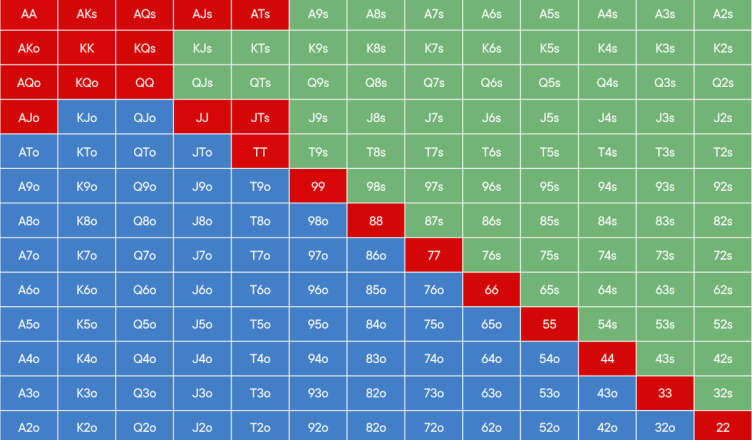
Six-max online poker in 2026 is a different beast than it was even a few years ago. Solvers have trickled down to the micros, GTO wizards populate the mid-stakes lobbies, and recreational players have absorbed just enough theory to be dangerous. If your preflop game is stuck in 2019, you’re basically bringing a butter knife to a lightsaber duel. The good news? You don’t need to memorize a thousand charts. You need a framework — a balanced, adaptable preflop range that holds up against both the solver nerds and the loose-aggressive maniacs.
Let’s break it down. Honestly, this is the stuff that separates break-even grinders from players who actually move up.
Why Six-Max Demands a Different Mindset
Full-ring poker rewards patience. You can fold for an hour and nobody blinks. Six-max? Not so much. With only six players, the blinds come around faster, and the average hand strength required to open is noticeably lower. If you’re waiting for Aces and Kings, you’ll blind out before the table notices you’re there.
In 2026, the meta has shifted even further toward aggression. Players three-bet lighter, four-bet more polarised, and punish limpers mercilessly. A balanced preflop range isn’t just about opening hands — it’s about constructing ranges that can withstand pressure from every position.
The Core Building Blocks of a Balanced Range
Before we get into specific charts, let’s talk principles. A balanced preflop range does three things well:
- It’s positionally aware. Your UTG range looks nothing like your Button range.
- It’s board-cover friendly. You want hands that flop well across multiple textures.
- It’s exploitable in the right spots. Pure GTO is a baseline, not a religion.
That last point matters. In fact, the best online players in 2026 use GTO as a skeleton and then adjust based on table dynamics. If the table’s tight, you widen. If it’s a three-bet fest, you tighten your opens and expand your four-bet bluffs.
Position-by-Position Breakdown
Under the Gun (UTG)
UTG in six-max is the toughest seat. You’re first to act, and five players behind you can wake up with a hand. Your range here should be tight but not nitty. Think around 15-18% of hands.
- Pairs: 55+
- Broadways: ATs+, KJs+, AJo+, KQo
- Suited connectors: T9s+ (sometimes 98s)
- Suited aces: A2s-A5s as occasional opens
That said, if the table is passive, you can sneak in some lower suited gappers. Just don’t get married to them.
Hijack and Cutoff
Here’s where things open up. The Hijack (HJ) can profitably open around 20-22%, and the Cutoff (CO) pushes toward 25-28%. You’re applying pressure, and the players left to act have to respect it.
Add hands like:
- Suited one-gappers: 97s, 86s, 75s
- Offsuit broadways: KJo, QJo, ATo
- More suited aces: A6s-A9s
These hands flop well and give you playability in position. And position, as always, is king.
Button
The Button is your money printer. You have position postflop, and the blinds are forced to defend wide. A balanced Button range in 2026 sits around 40-45% — sometimes higher against tight blinds.
You can open almost any suited hand, most offsuit broadways, and even some trashy hands like K5s or Q7s if the blinds fold too much. But — and this is important — balance matters. If you open 60% and never fold to a three-bet, good regs will torch you.
Small Blind
The Small Blind is the trickiest position in six-max. You’re out of position postflop, and the Big Blind has a massive discount to call. In 2026, the meta leans toward either a raise-or-fold strategy or a limp-heavy mixed strategy, depending on the stakes.
A solid SB opening range looks like:
- Raise: 22+, A2s+, K9s+, Q9s+, J9s+, T8s+, 98s, ATo+, KJo+
- Limp: Some suited trash and weak offsuit hands to balance
Honestly, most micro-stakes players should just raise-or-fold. Limping invites too many headaches unless you know exactly what you’re doing.
Big Blind
Defending the Big Blind is where a lot of players bleed money. You’re getting a discount, sure, but that doesn’t mean you should call with 72o just because it’s “cheap.”
Against a Button open, you can defend around 40-50% of hands. Against UTG, tighten to 25-30%. Use a mix of calls and three-bets — three-betting around 10-12% keeps your range balanced and punishes overly wide openers.
Three-Betting and Four-Betting: The Balance Equation
Here’s the deal — if you only three-bet with AA, KK, and QQ, you’re transparent. Regs will fold everything worse and four-bet you with impunity. You need bluffs.
Good three-bet bluffs include:
- Suited aces (A2s-A5s) — they block AA and AK
- Suited connectors (76s, 65s) — they flop equity
- Offsuit hands with blockers (AJo, KQo) in specific spots
For four-bets, polarise. Use premium hands (QQ+, AK) as value and A5s-A2s as bluffs. The goal is to make your opponent’s life miserable — not just to win pots, but to make them second-guess every decision.
Adapting to 2026 Trends
What’s changed this year? A few things stand out:
- Increased three-bet frequencies. Players are three-betting 12-15% in position, not 8%.
- More solver-inspired sizings. Small opens (2x) and small three-bets (3x IP, 4x OOP) are standard.
- Limping is back (sort of). In SB vs BB battles, limping has gained traction at higher stakes.
If you’re not adjusting, you’re falling behind. Simple as that.
Quick Reference Table
| Position | Open Range % | Key Hands |
|---|---|---|
| UTG | 15-18% | 55+, ATs+, KQs, AJo+ |
| HJ | 20-22% | 44+, A9s+, KTs+, ATo+ |
| CO | 25-28% | 22+, A2s+, K9s+, QTs+, ATo+ |
| BTN | 40-45% | Any pair, A2s+, K5s+, Q7s+, J8s+ |
| SB | 35-40% (raise) | 22+, A2s+, K9s+, Q9s+, J9s+ |
| BB (vs BTN) | 40-50% (defend) | 22+, A2s+, K7s+, Q8s+, J8s+ |
Final Thoughts: Balance Isn’t Perfection
Look, building a balanced preflop range isn’t about memorising every solver node. It’s about understanding why certain hands work in certain spots and then adjusting on the fly. The players who win consistently in 2026 are the ones who treat ranges as living, breathing things — not static charts.
Start with a solid baseline. Track your results. Exploit the regs who never adjust. And remember — every hand you fold preflop is a bullet dodged or a bluff missed, depending on the context. Balance is a moving target, and that’s what makes this game endlessly fascinating.