
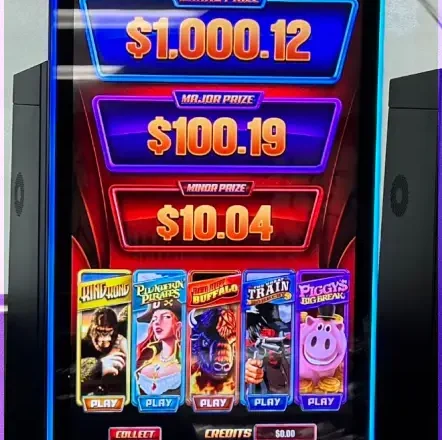
You know the classic casino scene, right? The hypnotic spin of a roulette wheel, the clatter of slot machine reels, the quiet tension at a blackjack table. It’s a world built on chance. But walk onto a modern casino floor today—or, honestly, just open a gaming app—and you’ll notice something new. There’s a buzz, a different kind of energy. It’s the sound of someone mastering a puzzle, hitting a tricky combo, or competing on a leaderboard. Welcome to the new frontier where gambling meets gaming.
We’re talking about the rise of skill-based casino games and these weird, wonderful hybrid arcade experiences. They’re blurring lines in a major way. And they’re not just a fad; they’re a direct response to a generation of players who grew up with controllers in their hands, not pull-levers.
Why Now? The Perfect Storm of Demographics and Tech
Let’s dive in. The traditional casino model, for all its glamour, hit a wall with millennials and Gen Z. For these folks, passive luck isn’t always enough. They crave agency, influence, and a sense of earned reward. They’re the “Fortnite” and “League of Legends” generation. Sitting back and hoping for a random jackpot feels… well, kinda boring.
At the same time, regulations started to shift. Places like New Jersey and Nevada paved the way, allowing a portion of a game’s outcome to be determined by player skill. That was the green light. Game developers and casino operators saw an opportunity—a massive one—to bridge two colossal industries: video gaming and gambling.
What Exactly Are Skill-Based Games?
It’s a fair question. In a pure skill-based casino game, your outcome is determined entirely by your ability. Think of it like an arcade game you bet on. You might be shooting aliens, solving a fast-paced puzzle, or testing your reflexes. Win the challenge, win the prize. Your skill level directly dictates your return.
But the real magic—and the more common trend—is in the hybrid skill-based slot machine. Here’s the deal: the base game might still be a traditional slot, decided by Random Number Generators (RNGs). But trigger a bonus round, and suddenly you’re in a mini-game. Match symbols under time pressure, navigate a maze, or tap targets in sequence. Your performance in that bonus round determines your extra payout. It’s a best-of-both-worlds model that keeps the core casino mechanics while injecting that vital shot of player influence.
The Arcade Hybrid: Where Pinball Meets the Payline
This is where things get really interesting. Some venues are leaning all the way into nostalgia and competition, creating full-blown hybrid arcade experiences. Imagine a sleek, adult-oriented arcade. You buy credits, you play games. But some of those games—like a high-stakes racing simulator or a competitive shooting gallery—offer cash prizes or tickets redeemable for cash based on your score.
It feels like an arcade. It smells like an arcade (minus the sticky floors, hopefully). But the potential payout structure introduces a gambling-adjacent thrill. These spaces are social, loud, and skill-focused. They’re designed to make you feel like a winner because of your talent, not just your luck.
Key Drivers and, Okay, Some Challenges
So what’s fueling this? A few things, honestly. First, increased player engagement. Skill elements make people play longer. They get invested. Second, it’s a powerful customer acquisition tool for casinos, pulling in that coveted younger demographic. And third, it creates new revenue streams for the entire iGaming industry.
But it’s not all smooth sailing. Regulators are carefully watching this space. Defining the exact line between a game of skill and a game of chance is tricky. There’s also the player psychology aspect. A player who loses at a pure chance game might blame luck. A player who loses at a skill-based game might blame themselves—and that can be a very different, sometimes negative, emotional experience. Operators have to manage that carefully.
A Peek at the Games Changing the Game
Don’t just take my word for it. Let’s look at some concrete examples that are making waves right now.
| Game/Concept | Skill Element | The Hybrid Twist |
| Slot Tournaments | Strategic betting & timing | Players compete on leaderboards in real-time on linked slot machines, with entry fees and prize pools. |
| Interactive Video Poker Bonuses | Strategic card holding & mini-game reflexes | Beyond the standard draw, bonus rounds might involve quick-fire decisions to multiply wins. |
| Arcade-Style Betting Terminals | Physical dexterity, pattern recognition | Games that mimic classic arcade cabinets (like racing or shooting) where your score correlates to a cashable win. |
| Skill-Based Table Game Side Bets | Prediction, memory, or speed | At a traditional table, an optional side bet might involve a quick puzzle or prediction challenge against other players. |
You see the pattern? It’s about layering. Taking the familiar and adding a interactive, competency-based wrapper. That wrapper is everything.
The Future: More Than Just a Gimmick
Where is this all headed? Well, the trajectory points toward deeper integration. We’re looking at a future where:
- Esports Betting Convergence becomes seamless. Imagine placing a live, in-play bet on a professional “Valorant” match, then jumping into a skill-based casino game with a similar theme right in the same app.
- Virtual and Augmented Reality take the immersion to a whole new level. Picture a VR blackjack table where you can physically look at your cards, then engage in a 3D bonus round that has you defusing a virtual bomb for a multiplier. The sensory detail is a game-changer.
- The very definition of a “casino” expands. It might become a multifaceted entertainment complex: a traditional floor here, a hybrid arcade lounge there, an esports viewing arena upstairs. All under one roof, catering to different shades of the same desire: to play, to compete, to win.
In fact, the success of these models is forcing a fundamental question: What do people really want from games of chance? Or, maybe, games of influence? The answer seems to be a mix. The timeless thrill of risk, paired with the modern demand for agency and accomplishment.
That’s the core of it. The rise of skill-based games and hybrid arcades isn’t about replacing the roulette wheel. It’s about building a new wing right next to it. One filled with the sounds of buttons mashing, friendly trash talk, and the satisfying click of a high score that actually pays out. It’s the sound of an industry evolving, one skillful play at a time.